
No products in the cart.
Shop all products
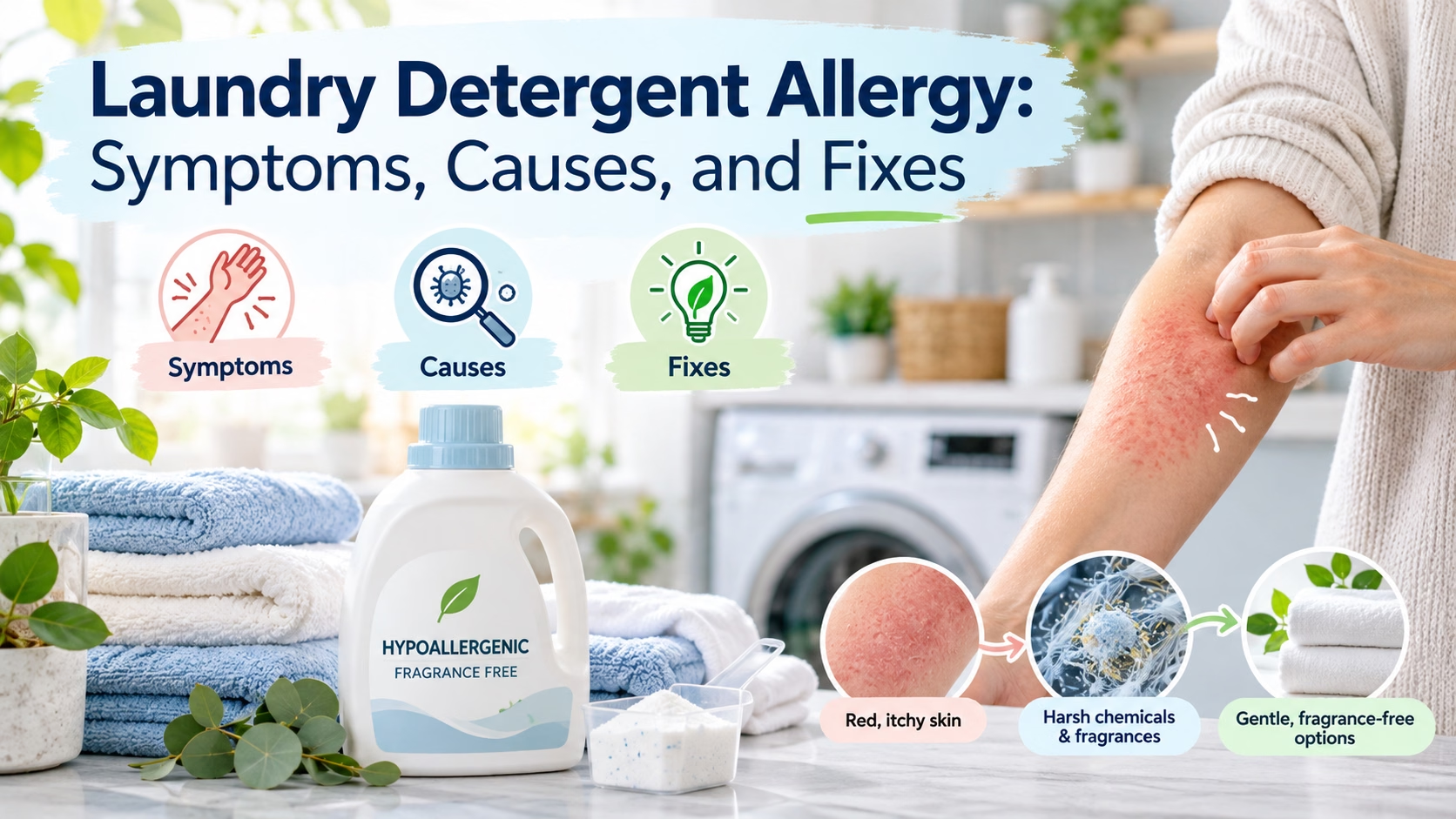
If your skin gets itchy, red, or rashy after wearing freshly washed clothes, the problem might not be your skin at all. A laundry detergent allergy is more common than most people realize, and it can show up weeks or months after you switch products, which makes it easy to misdiagnose. This guide walks through the symptoms, the ingredients most likely to blame, and the practical steps that can calm your skin down for good, including how to pick a detergent that is far less likely to trigger a reaction in the first place.
What Is a Laundry Detergent Allergy?
A laundry detergent allergy usually means your immune system is reacting to a specific ingredient in the formula, a type of reaction doctors call allergic contact dermatitis. According to the Cleveland Clinic, this reaction commonly shows up as itching, redness, and swelling after you wear or use laundered items, and it can worsen existing skin conditions like eczema. It is different from an irritant reaction, which happens when a harsh ingredient simply irritates the skin on contact, with no immune response involved. Both can look similar on the surface, but they call for different fixes.
Common Laundry Detergent Allergy Symptoms
Symptoms tend to appear on skin that had the most contact with fabric, such as the torso, inner arms, thighs, and underarms. The reaction often takes hours to a couple of days to develop, which is why people rarely connect it to laundry at first.
- Itching and redness on areas covered by clothing, bedding, or towels
- Dry, scaly, or flaky patches that do not improve with regular moisturizer
- Small bumps or hives that appear in a pattern matching clothing seams
- Worsening of existing eczema or psoriasis after a detergent change
- Burning or stinging, especially in sensitive areas like underarms or the groin
A useful clue: symptoms that show up specifically after contact with freshly washed fabric, and fade when you switch back to an old, already-rinsed load, point toward the detergent rather than the fabric itself.
What Causes Allergic Reactions to Laundry Detergent
Most detergent-related reactions trace back to a small list of repeat offenders. Knowing which ingredient is the likely culprit makes it much easier to shop smart going forward.
Fragrances and Dyes
Added fragrance is the single most common trigger for detergent-related skin reactions. A peer-reviewed review published on PubMed Central notes that fragrance ingredients are among the leading causes of allergic contact dermatitis, and that avoidance of the allergen is the primary way to manage it. Dyes added purely for appearance carry similar risk and add zero cleaning benefit.
Enzymes and Preservatives
Enzymes help break down protein and starch stains, but they can irritate sensitive or broken skin, especially at higher concentrations. Preservatives that keep liquid detergent shelf-stable, including certain formaldehyde-releasing compounds, are also recognized skin sensitizers in some people.
Optical Brighteners
Optical brighteners make whites look “whiter” by reflecting light, but they sit on the fabric fibers rather than rinsing away completely. In some people, residue from brighteners only triggers a reaction once that skin is later exposed to sunlight, which can make the cause-and-effect even harder to spot.
How to Tell If It’s Your Detergent (vs. Something Else)
Before assuming detergent is the cause, rule out a few common look-alikes:
- Fabric softener and dryer sheets, which carry their own fragrance and chemical loads and are a frequent hidden trigger
- New fabric dyes or finishes on recently purchased clothing
- Hard water mineral residue left behind when detergent cannot fully rinse out, which can cause stiffness and irritation of its own
- Heat rash or dry winter skin, which can mimic a detergent reaction but clears up with humidifying or temperature changes rather than a product switch
If you recently started washing in cold water, it is also worth checking that your detergent fully dissolves at that temperature. Our cold water laundry detergent guide covers how to avoid leftover residue that can feel a lot like an allergic reaction.
How to Fix and Prevent a Laundry Detergent Allergy
Switch to a Hypoallergenic or Free & Clear Detergent
Look for products labeled “free and clear,” “dye-free,” or “fragrance-free,” and check the ingredient list rather than relying on marketing claims alone. A detergent built around plant-based surfactants with no added dye or perfume removes the two most common triggers in one step. Our guide to detergents for sensitive skin breaks down what to look for on the label.
Double-Rinse and Use Less Detergent
Using too much detergent is a common, overlooked cause of skin irritation, since excess product is harder for your machine to rinse away completely. Check your machine’s load size settings and run an extra rinse cycle for bedding, towels, or anything worn against sensitive skin. Our guide on how many laundry pods to use explains how to dose correctly for your load size and water hardness.
Watch Fabric Softener and Dryer Sheets Too
If switching detergent alone does not solve the problem, drop fabric softener and dryer sheets next. They coat fabric with fragrance and conditioning agents that can linger against skin far longer than detergent residue does. A wool dryer ball or a short extra rinse often replaces the softness without the added chemical load.
Choosing a Detergent That Won’t Trigger Reactions
When you are shopping for a detergent that is gentler on skin, prioritize these factors:
| Look For | Avoid |
|---|---|
| Fragrance-free or unscented formulas | Added perfume or “fresh scent” blends |
| Dye-free liquid or pods | Bright blue, green, or orange dyed formulas |
| Short, recognizable ingredient lists | Vague terms like “proprietary blend” |
| HE-compatible formulas that rinse cleanly | High-residue detergents in hard water |
Compatibility with your washer matters too. If you run an HE machine, our HE detergent guide explains why low-residue formulas rinse more completely, which cuts down on leftover product sitting against skin. Safi laundry pods are formulated without added dyes and with dermatologist-tested ingredients, which makes them a reasonable starting point if you are trying to rule detergent out as the cause of a skin reaction.
Frequently Asked Questions
How long after switching detergent do allergy symptoms appear?
Reactions can appear within hours, but they often take one to three days to develop, especially with mild sensitivities. That delay is exactly why so many people never connect a new rash to a detergent change, and why doctors recommend tracking product switches alongside symptom timing.
Is fragrance-free the same as hypoallergenic?
Not always. Fragrance-free means no perfume was added, while hypoallergenic is a broader, less regulated marketing term that can still include dyes, enzymes, or preservatives. Always check the full ingredient list rather than relying on either label alone, especially if you have a known sensitivity.
Can laundry detergent allergies get worse over time?
Yes. Repeated exposure to an allergen can increase sensitivity, and the Cleveland Clinic notes that detergent reactions can worsen existing conditions like eczema with continued contact. Switching to a dye-free, fragrance-free formula as soon as you suspect a reaction tends to limit how severe it becomes.
Should I see a doctor for a suspected detergent allergy?
See a doctor if symptoms persist after switching detergents, spread beyond the original area, or if you experience swelling of the face or throat or trouble breathing, which needs immediate medical attention. A dermatologist can run a patch test to confirm the exact ingredient responsible.
The Bottom Line
A laundry detergent allergy is frustrating to pin down, but it is usually manageable once you identify the trigger. Start by ruling out fragrance, dye, and excess product as the likely causes, and consider switching to a cleaner formula while you test the theory. If you are ready to try a dye-free, fragrance-conscious option, you can shop Safi laundry pods and see whether a simpler ingredient list makes a difference for your skin.