
No products in the cart.
Shop all products
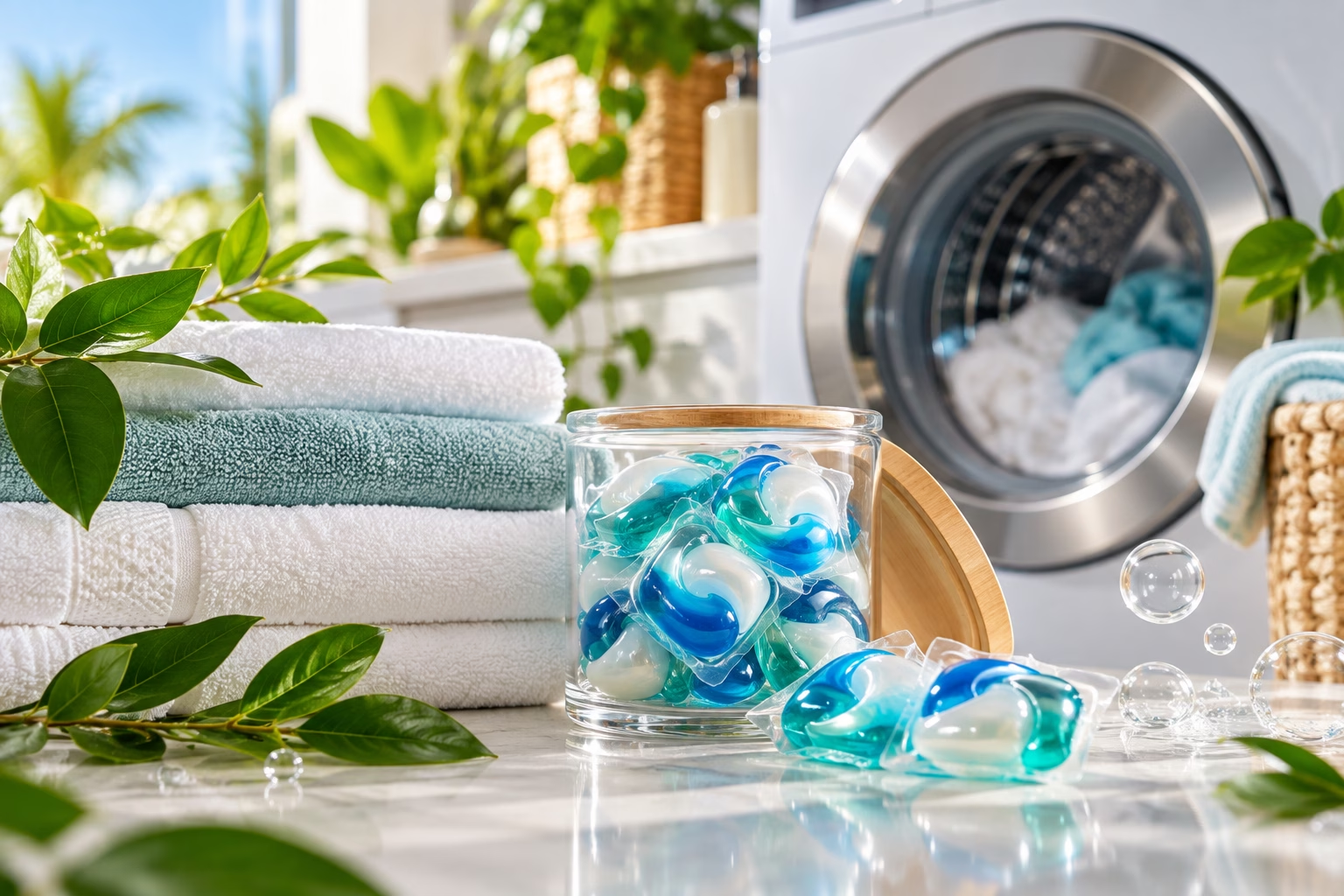
An eco-friendly laundry detergent is one of the simplest swaps you can make for a greener household, but the label alone does not tell you much. With “green,” “natural,” and “eco” printed on nearly every bottle in the aisle, it is worth knowing exactly which ingredients, certifications, and packaging choices actually reduce environmental impact. This guide breaks down what makes a sustainable laundry detergent genuinely different from a regular one, which certifications are worth trusting, and how small changes to your wash routine add up over a year of laundry.
What Makes a Laundry Detergent Truly Eco-Friendly?
Not every claim on a detergent bottle is backed by a real standard. A handful of measurable factors separate a genuinely sustainable formula from a marketing label, and understanding them helps you compare products instead of guessing.
Biodegradable Surfactants
Surfactants are the ingredients that actually lift dirt and oil from fabric. According to the American Cleaning Institute, the surfactants used in most household detergents today are readily biodegradable, a shift the industry made decades ago when it moved away from slower-degrading branched-chain compounds. Look for detergents that specifically disclose biodegradable surfactant sources rather than simply listing “cleaning agents.”
Phosphate-Free Formulas
Phosphates were once common detergent builders, but they contribute to algae blooms and oxygen-depleted “dead zones” in lakes and rivers when they wash into waterways. Multiple states banned phosphates in cleaning products starting in the 1980s, and most residential detergents sold today, including Safi laundry detergent, are formulated without them.
Reduced and Recyclable Packaging
Concentrated formulas and pods use less plastic per load than traditional jug-style liquid detergent, since they ship less water and require smaller containers. When comparing packaging, check whether the container is recyclable in standard curbside programs and whether the product is concentrated enough to reduce the number of containers you buy per year.
Eco-Friendly Certifications Worth Trusting
Third-party certifications are more reliable than a company’s own “eco” claims because they require independent verification. The most recognized is the EPA Safer Choice Standard, which requires every ingredient to be reviewed for human and environmental safety, prohibits inorganic phosphate builders, restricts volatile organic compounds, and requires surfactants to biodegrade within 28 days. The Environmental Working Group also publishes an independent guide to decoding cleaning product labels that can help you spot vague or unverified claims.
- EPA Safer Choice: ingredient-level safety review plus environmental and packaging criteria
- Full ingredient disclosure: brands that list fragrance components, not just “fragrance”
- Biodegradability data: specific claims (e.g., “surfactants biodegrade within 28 days”) rather than generic “plant-based” wording
Does an Eco-Friendly Detergent Clean As Well as a Regular One?
This is the question that stops most people from switching. Modern enzyme-based formulas, the same technology used in Safi laundry pods, break down protein, starch, and grease stains without relying on phosphates or harsh optical brighteners. In practice, a well-formulated eco-friendly detergent performs comparably to conventional detergent on everyday loads. The bigger variable is usually wash temperature and dosage, not the “eco” label itself. Our cold water laundry detergent guide covers how enzyme detergents perform at lower temperatures, which also cuts household energy use.
Laundry Pods and Sustainability: Why Concentrated Formats Cut Waste
Pre-measured pods solve two sustainability problems at once. First, they eliminate over-dosing, which is common with liquid detergent and simply sends extra chemicals down the drain without improving cleaning results. Second, because the formula is concentrated and pre-dosed, pods ship in smaller, lighter packaging than jug detergent, which reduces the plastic and cardboard used per load. If you are unsure how many pods a load actually needs, our pod dosage guide walks through it by load size and soil level.
| Format | Typical Packaging per Load | Over-dosing Risk |
|---|---|---|
| Liquid jug detergent | Higher (bulky plastic jug, mostly water) | Common |
| Powder detergent | Moderate (cardboard box, some plastic scoop) | Moderate |
| Pre-measured pods | Lower (compact, concentrated) | Low, dose is fixed |
Building a More Sustainable Laundry Routine
The detergent itself is only part of the picture. A few habits make any detergent, eco-certified or not, go further and do less environmental damage:
- Wash in cold water when possible. It saves energy and is gentler on fabric dyes.
- Run full loads. Half-full loads waste water and detergent per garment washed.
- Use the recommended dose. More detergent does not mean cleaner clothes, just more residue and runoff.
- Air-dry when practical. The dryer is typically the most energy-intensive step in the laundry cycle.
You can read more about the full product lineup and formulation approach on our Why Safi page, or see the wash process end to end on the how it works page.
Frequently Asked Questions
Is eco-friendly laundry detergent as effective as regular detergent?
Yes, in most cases. Modern eco-friendly formulas use enzyme technology to break down common stains like grease, grass, and protein-based soils. Performance depends more on matching detergent dose and water temperature to the load than on whether the formula is labeled eco-friendly.
What ingredients should I avoid in a sustainable laundry detergent?
Look out for inorganic phosphate builders, which the EPA Safer Choice program prohibits due to waterway pollution, and vague “fragrance” listings that do not disclose specific components. Optical brighteners are not environmentally harmful in the same way, but they do not contribute to actual cleaning either.
Are laundry pods more eco-friendly than liquid detergent?
Pods generally use less packaging per load because they are pre-measured and concentrated, which also prevents the over-dosing that commonly happens with liquid detergent. The tradeoff is that pod film dissolves in water rather than being recycled, so the net packaging savings comes primarily from the smaller container size.
Does phosphate-free detergent clean as well as older phosphate formulas?
Yes. Manufacturers phased out phosphates from residential laundry detergent decades ago and replaced them with alternative builders and enzymes, so today’s phosphate-free formulas are the industry standard, not a compromise.
The Bottom Line
Choosing an eco-friendly laundry detergent comes down to a few concrete factors: biodegradable surfactants, no phosphates, minimal packaging, and ideally a recognized certification like EPA Safer Choice. Safi laundry pods are formulated without phosphates, use pre-measured doses to prevent waste, and ship in compact packaging designed to cut down on plastic per load. Shop Safi laundry pods to see the full lineup and find the right fit for your household.