
No products in the cart.
Shop all products

As moms, we’re constantly on the lookout for ways to simplify our routines without sacrificing quality — especially when it comes to laundry. Between school uniforms, sports gear, delicate baby clothes, and everyday messes, finding the right laundry detergent can feel like solving a never-ending puzzle. Should you go with traditional liquid detergent, or opt for the modern convenience of laundry pods? More importantly — which one actually cleans better?
In this comprehensive guide, we’ll break down the pros and cons of each option, highlight the role of fabric softener, and explain why Safi Laundry Pods are becoming the go-to choice for busy households across the globe.
Understanding the Basics: What’s the Difference?
Liquid Laundry Detergent: This is the traditional form of detergent that comes in a bottle. It’s been around for decades and offers flexibility in how much you use per load. It’s great for pre-treating stains and generally affordable.
Laundry Pods: These are pre-measured pouches filled with concentrated detergent (sometimes with added fabric softener or stain remover) wrapped in a dissolvable film. They’re mess-free, portable, and extremely easy to use.
Cleaning Performance: Which One Wins?
When it comes to cleaning power, both pods and liquid detergent can be effective — but the key lies in formulation.
Safi Laundry Pods are designed with powerful, concentrated cleaning agents that rival — and often outperform — many liquid detergents. Each pod contains the perfect amount of detergent needed for a full load, including advanced enzymes to break down tough stains like grass, food, and sweat. No measuring, no mess, no guessing.
Liquid Detergents, on the other hand, are often over-poured. That means you might be using more than necessary, which doesn’t always equal cleaner clothes. In fact, using too much detergent can lead to residue build-up that traps dirt rather than washing it away.
Stain Removal
Let’s talk stains. Every mom has faced the horror of spaghetti sauce on a white shirt or a grass stain from soccer practice.
Liquid detergents are great for pre-treating stains because you can apply them directly.
Safi Pods handle this with ease thanks to their powerful enzyme blend. While you can’t rub a pod on a stain, you can drop it into the washer knowing it will handle most messes without extra steps.
Pro Tip: For extra stubborn stains, use a bit of Safi’s concentrated detergent formula (available separately) as a spot treatment before washing with a pod.

Convenience and Ease of Use
Here’s where pods really shine. With Safi Laundry Pods, there’s no need to measure or worry about spills. You simply toss one into the drum, add your clothes, and press start. This is especially handy for:
Teens doing their own laundry
Grandparents who want simplicity
Parents multitasking with a baby on one hip
Liquid detergents can be heavy, messy, and tricky to pour — especially when you’re trying to juggle other responsibilities.
Fabric Softener Compatibility
We all love soft, static-free clothes that smell amazing. Fabric softener is a great addition to your laundry routine — and both pods and liquid detergents can work alongside it.
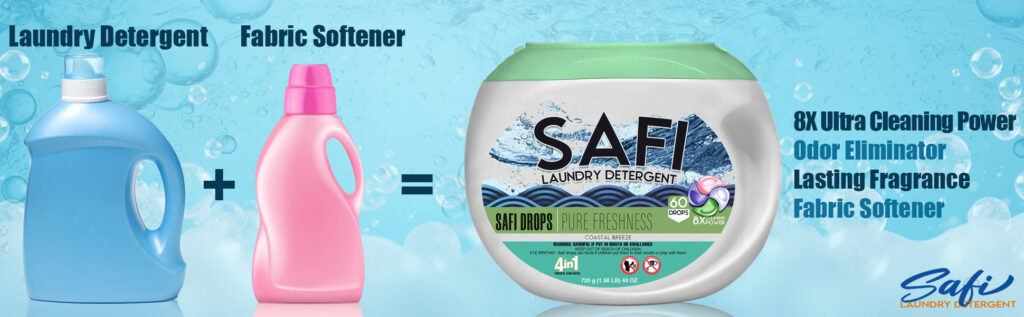
Safi’s pods are formulated to complement your favorite fabric softeners. They don’t leave behind sticky residue that interferes with softness. Plus, Safi is launching a matching fabric softener line soon, designed to enhance the results of their detergent pods.
Cost and Value
Some people assume pods are more expensive — but when you consider how often liquid detergent is overused, pods can actually save money in the long run. You’re using exactly what you need, every time.
Safi Laundry Pods are affordably priced and packed with concentrated ingredients, making each load cost-effective. No more pouring extra “just in case.”
Storage and Safety
Laundry pods are compact and tidy. No bulky bottles, sticky caps, or leaky containers. They take up less space on your shelf — a big win for small laundry rooms.
However, as with any cleaning product, they should be stored safely. Keep Safi Pods in their child-proof container and out of reach of little ones.
Environmental Impact
Safi is committed to sustainability. Their pods are made with biodegradable film and concentrated detergent, meaning fewer chemicals and less packaging waste. Compare this to bulky liquid detergent jugs that are often difficult to recycle.
Using cold water cycles? No problem. Safi Pods dissolve completely in both hot and cold water, helping you save energy without sacrificing cleanliness.
Moms Love Safi: Real-Life Stories
“I switched to Safi Pods because I was tired of the mess with liquid detergent. Now my kids’ clothes come out clean, smell amazing, and I don’t have to scrub the detergent cup after every wash!” – Laura, mom of 3
“My daughter has sensitive skin, so I’m super picky about laundry products. Safi Pods are gentle, hypoallergenic, and safe for the whole family.” – Priya, new mom
Final Verdict: Which Should You Choose?
Both laundry pods and liquid detergent have their strengths, but for the modern mom who wants results, simplicity, and peace of mind, Safi Laundry Pods are the clear winner.
They clean deeply, preserve fabric quality, and simplify your life. Add in a compatible fabric softener, and you’ve got a laundry routine that works as hard as you do.
So next time you’re restocking your laundry shelf, skip the spills and guesswork. Reach for Safi Laundry Pods — the smarter, cleaner, mom-approved choice.
Frank
This article really dives into the practicalities of laundry detergents, comparing pods and liquids in a way that feels relatable. I’ve always wondered if pods are actually worth the cost, but the point about overusing liquid detergent makes so much sense. Plus, the convenience of no mess and compact storage is a huge win, especially for small spaces like mine. The sustainability angle is a big plus too—biodegradable film and less waste are definitely appealing. I’m curious though, do the pods work as well in hard water areas? And has anyone noticed a difference with the upcoming fabric softener line? I might just switch to pods after reading this!
Roxanne Whisper
Safi Pods seem like a game-changer for laundry! I’ve always struggled with liquid detergent spills and overpouring, so the idea of a tidy, mess-free solution is appealing. It’s great to hear they’re biodegradable and work well in cold water — sustainability is a big plus. I wonder, though, how effective are they on really tough, set-in stains compared to liquid detergents? Also, the claim about saving money is interesting, but I’d love to see a cost comparison with popular brands. Has anyone tried Safi’s upcoming fabric softener line yet? And for parents with kids — how childproof are these pods really? Would you trust them in a household with curious toddlers? I’m tempted to give them a try, but I’d love to hear more real-life experiences!
Peter
I found this article really helpful, especially the part about using Safi’s concentrated detergent for stubborn stains. I’ve always struggled with grass stains on my kids’ clothes, so I’ll definitely give it a try. The idea of pods being more cost-effective in the long run is interesting—I’ve always thought they were pricier. I’m curious about the new fabric softener line; will it be as eco-friendly as the pods? I also appreciate the emphasis on sustainability, but I wonder how much of a difference it really makes compared to traditional detergents. Has anyone else noticed a significant improvement in their laundry since switching to pods?
Robert
Cleaning with pods seems like a game-changer, especially for busy parents like me. I’ve always struggled with liquid detergent spills and overuse, so the idea of precise, mess-free pods is appealing. The fact that Safi’s pods are eco-friendly and work in cold water is a huge plus for someone trying to reduce their environmental impact. I’m curious, though, how do they compare in terms of stain removal for really tough messes like grease or ink? Also, the mention of a matching fabric softener line has me intrigued — will it be as effective as the pods? Overall, this seems like a practical solution, but I’d love to hear more about long-term cost savings and user experiences.